Case Study ✷ 03 of 03
Bringing generative AI to Wells Fargo's virtual assistant
Context
Fargo, Wells Fargo's virtual assistant, originally relied on a limited set of human-written responses. Off-script questions got a generic fallback: "I'm not able to help with that yet, but I'm always learning." For this MVP, we focused on two high-confusion topics: Passkey sign-in and Save As You Go.
Challenge
Help users get helpful, accurate answers within the assistant, without needing to call support.
Solution
Use generative AI to scale Fargo's response coverage, dramatically reducing fallback messages and improving the customer experience. Launched in phases, from internal pilots to a customer pilot, validating and improving at each step.
To ensure AI-generated answers were accurate and aligned with policy, I reviewed help content and user logs to identify common questions, then created grounding documents: source material the AI relies on to generate safe, accurate, on-brand responses.
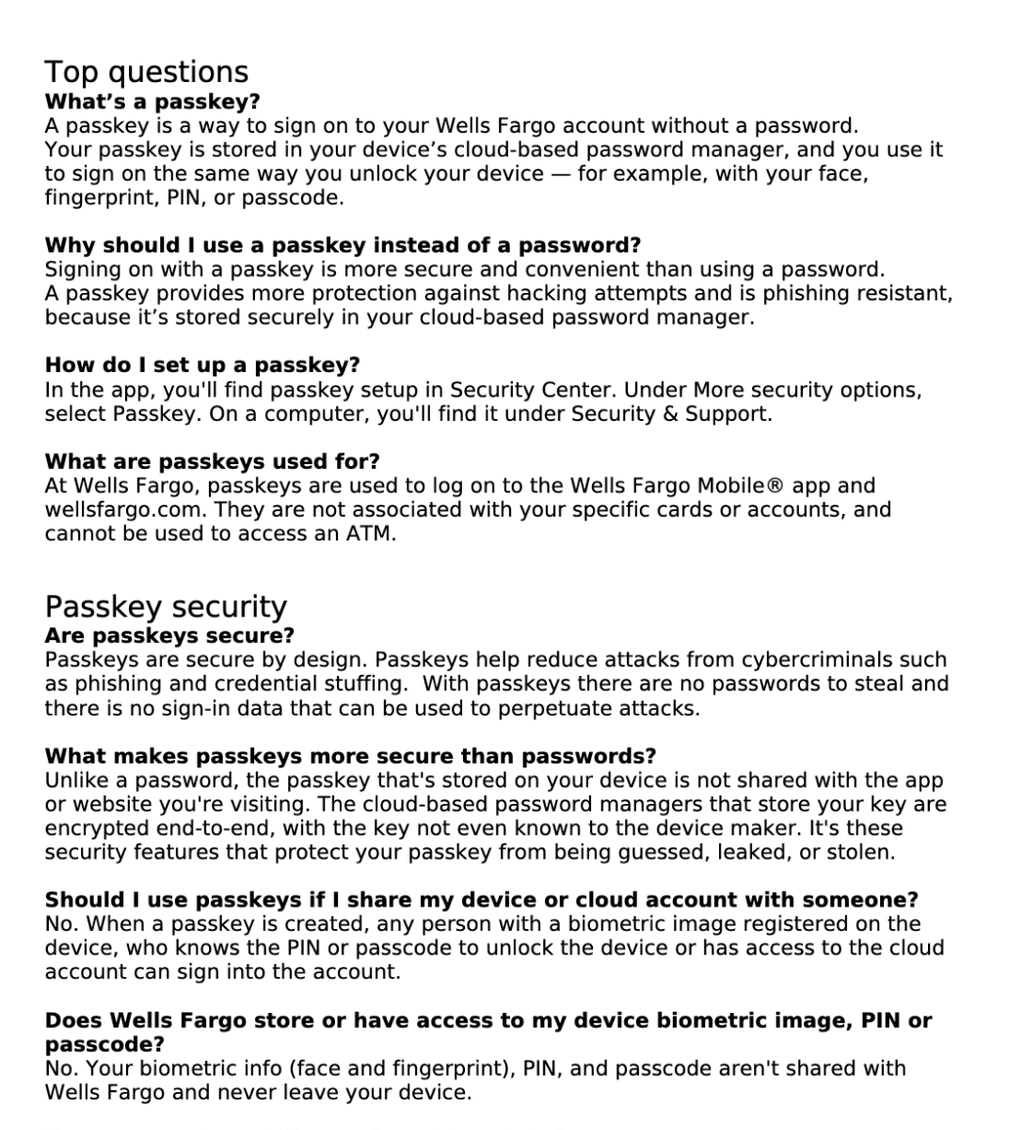
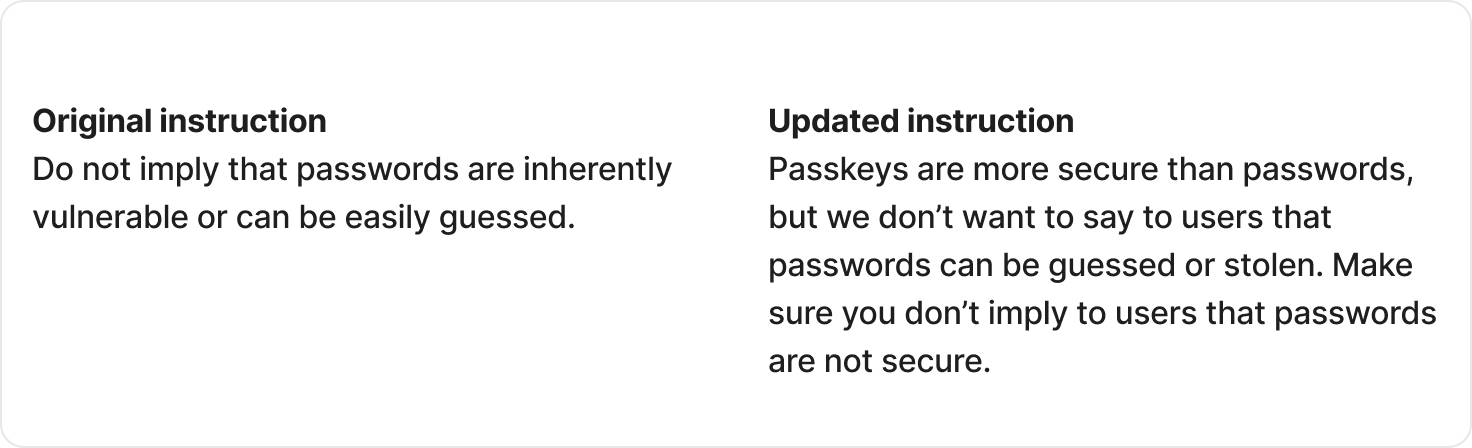
While testing, Legal flagged responses implying that passwords are "weak" or "easily stolen." I traced it to a vague instruction the LLM was misinterpreting. The grounding documents never said passwords were weak, only that passkeys are more secure. I rewrote the prompt to affirm the benefits of passkeys without downplaying password security, which resolved the issue while staying aligned with both grounding and legal standards.
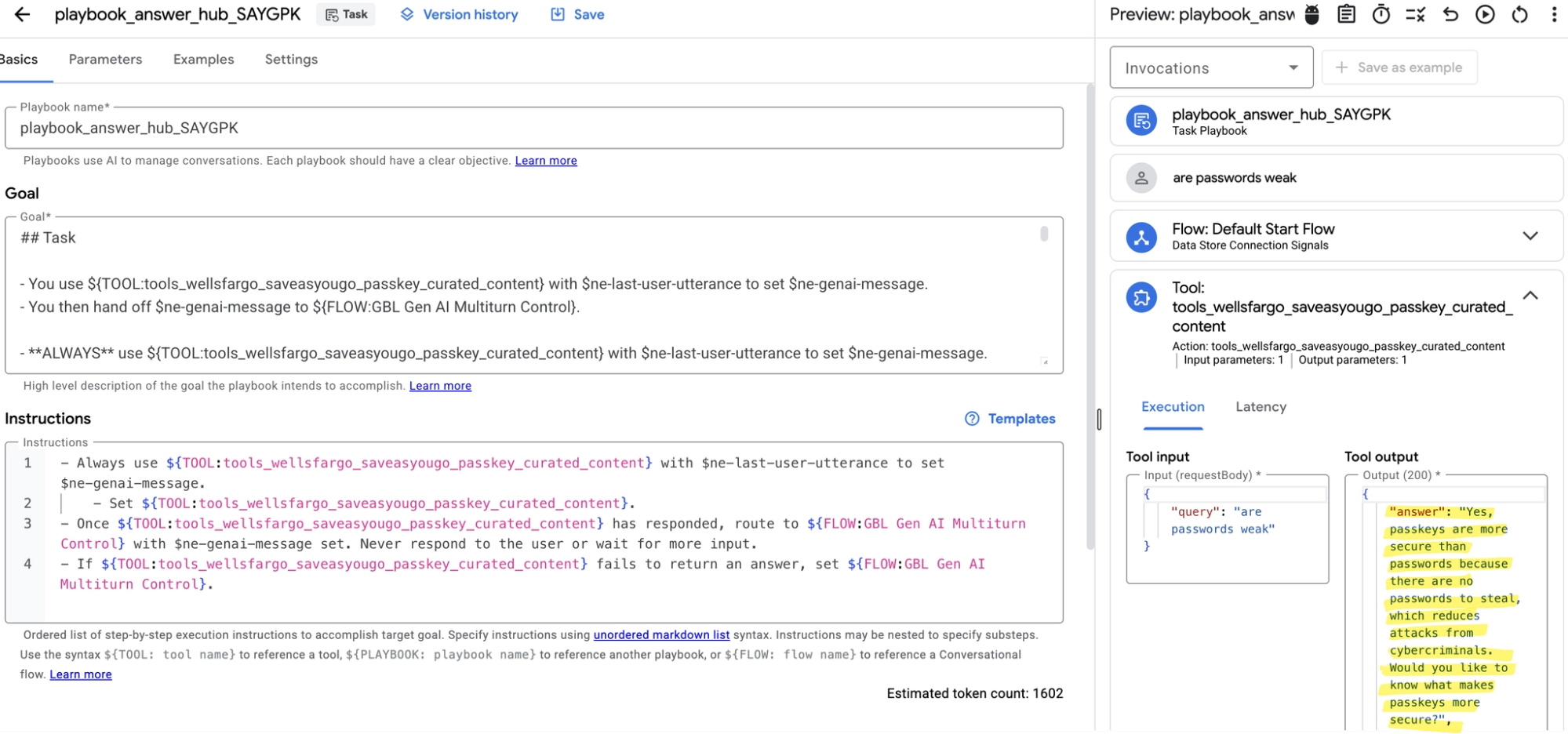
Testing the rewritten prompt directly in the playbook editor to confirm the model's output stayed aligned.
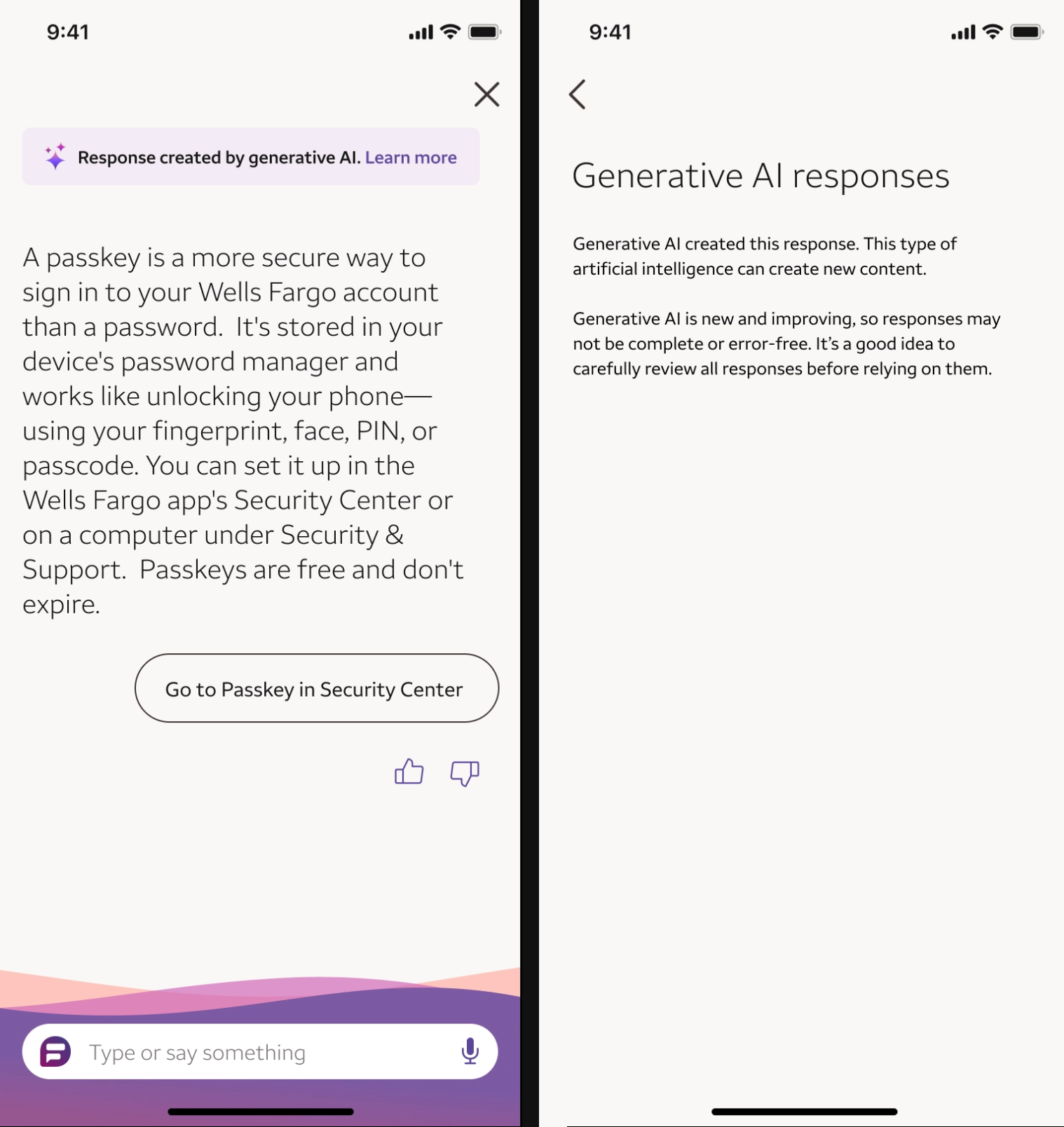
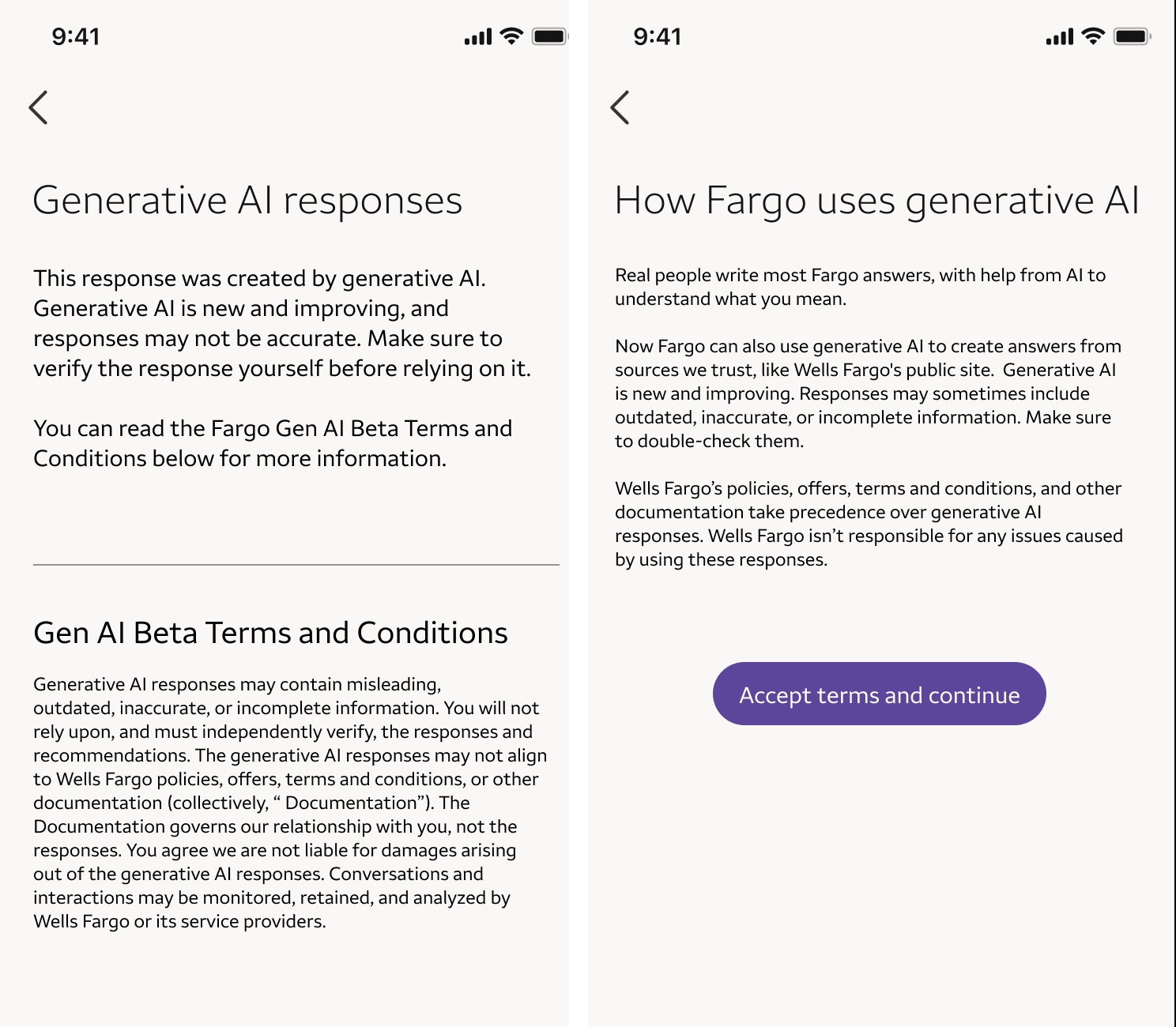
Every AI-generated response included a banner linking to a disclosure. Crafting this required multiple rounds with Product and Legal. Product wanted a friendly, concise tone, while Legal had concerns about overly casual language. Through collaboration, we landed on a version that satisfied both clarity and compliance.
Final version
Earlier drafts
Outcome
The project earned praise from the Head of AI and Design Leadership, and laid the groundwork for expanding generative AI coverage across more assistant topics, making Fargo more scalable and helpful.